Mobile Mechanic Guide
Why Is My Car A/C Blowing Warm?
The most common causes of warm car A/C in Columbia’s heat — and how to tell which one it is before you waste money on a refrigerant can.
You get in on a hot Columbia afternoon, crank the A/C — and it blows warm. Annoying, and in a Midlands summer, miserable. The good news: warm A/C usually comes down to a handful of causes, and most can be checked and fixed right in your driveway. Here’s what’s likely going on and what to do about it.
The Most Common Reason: Low Refrigerant from a Leak
The most common cause of warm air is low refrigerant. A/C is a sealed system — it doesn’t “use up” refrigerant, so if it’s low, it leaked out somewhere: a worn O-ring, a tired hose, or a pinhole in the condenser.
This is why just “topping it off” with a cheap can of refrigerant is a short-term fix — you’ll be blowing warm again within weeks or months unless the leak is found and sealed. A proper service adds UV dye, finds the leak, and fixes the actual cause.
Other Reasons Your A/C Blows Warm
If refrigerant isn’t the issue, it’s usually one of these:

- Failing A/C compressor — the heart of the system. In SC heat it works overtime; when it fails, cooling stops. You may hear grinding or clicking.
- Clogged or bug-caked condenser — sits at the front of the car, catches bugs, leaves, and road debris, and can’t shed heat when blocked.
- Electrical or relay fault — a blown fuse, bad relay, or wiring issue can stop the compressor from kicking on.
- Bad blend-door actuator — the flap that mixes hot and cold air gets stuck, so you get heat instead of cold.
- Dirty cabin air filter — won’t cause warm air exactly, but kills airflow so the cold you do have barely reaches you.
Quick Things You Can Check Yourself
- Set it to the coldest setting and max fan — does the compressor click on under the hood?
- Feel the airflow — weak airflow points to a blower or cabin-filter problem, not refrigerant.
- Look for oily residue on A/C lines or fittings (a sign of a refrigerant leak). Refrigerant itself has almost no smell; a sweet smell usually means a coolant or heater-core leak, which is a different problem.
- Make sure you’re on A/C, not just the fan, and recirculation is on during peak heat.
If none of that fixes it, it’s time for a proper diagnosis — guessing with refrigerant cans usually wastes money.
Why It’s Worse in Columbia
South Carolina summers push A/C systems to their limit. Typical July highs in the low 90s, and about 75 days a year at 90°F or hotter, make the compressor and condenser work overtime, and small leaks that stay hidden in cooler climates show up fast here. A system that felt “fine” in spring often quits on the first brutal week of summer — which is exactly when you need it most.
Get It Fixed Where You Are
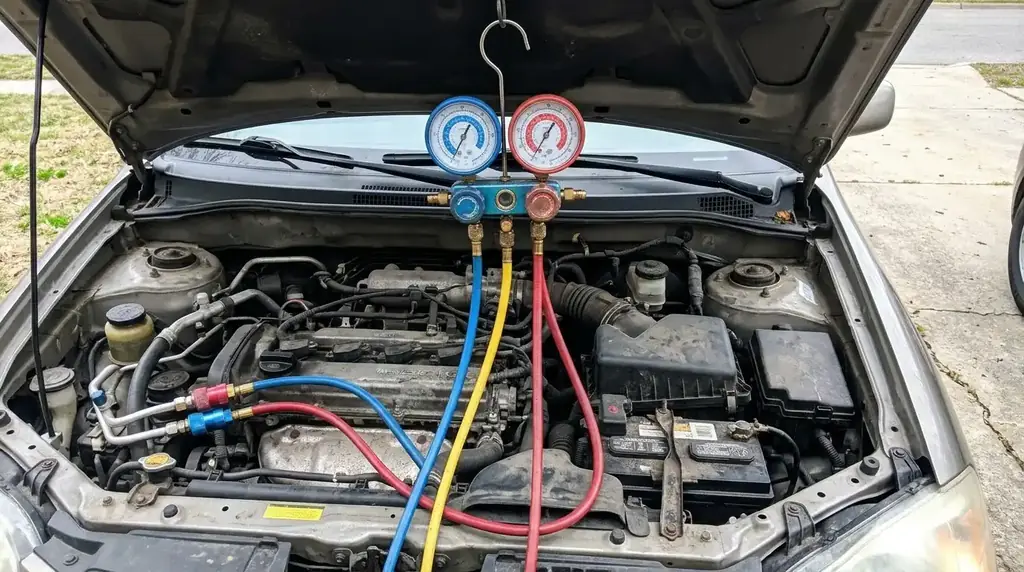
You don’t have to sit in a shop waiting room in the heat. A mobile mechanic comes to your driveway or workplace, checks the pressures, finds the real cause — leak, compressor, electrical, or airflow — and explains the fix and the price before any work starts. See our mobile A/C repair service, our pricing guide, or call a mobile mechanic in Columbia, SC today.
A/C Blowing Warm? We’ll Cool It Down at Your Place.
Call (839) 269-9955 any time, 24/7, to check availability for your area. Your mechanic will explain what’s wrong before fixing it.